
In today’s fast-paced classroom environment, keeping students engaged can be a challenge. That’s where the Classroom Engagement Model (CEM) comes into play. This powerful tool helps educators create lessons that are not only educational but also captivating and interactive. The CEM checklist is a simple yet effective way to ensure that every student is actively involved and motivated throughout the lesson. With the right application of the CEM checklist, teachers can boost student engagement, improve learning outcomes, and make every classroom experience memorable. Whether you’re new to teaching or have years of experience, the Classroom Engagement Model (CEM) checklist is a gamechanger. By focusing on engagement strategies, active participation, and diverse teaching methods, the CEM checklist provides a structured approach to create a dynamic learning environment. In this guide, we’ll break down the key components of the CEM checklist, how to implement it, and the best practices to boost classroom engagement.

The Classroom Engagement Model (CEM) checklist isn’t just a list of techniques, it’s a comprehensive framework designed to foster student involvement and enhance learning. By using the CEM checklist, teachers are able to create lessons that emphasize interactive learning, ensure that students understand the objectives, and integrate a variety of teaching strategies to keep learners interested. The checklist allows educators to balance traditional methods with creative, student-centered approaches that cater to diverse learning styles. By engaging students actively in the learning process, teachers can spark curiosity, improve comprehension, and encourage critical thinking. Whether through group work, multimedia use, or hands-on activities, the CEM checklist ensures that each student’s needs are addressed. The model is a practical way for educators to align their teaching methods with student needs, fostering an environment where learning can thrive.
Table of Contents
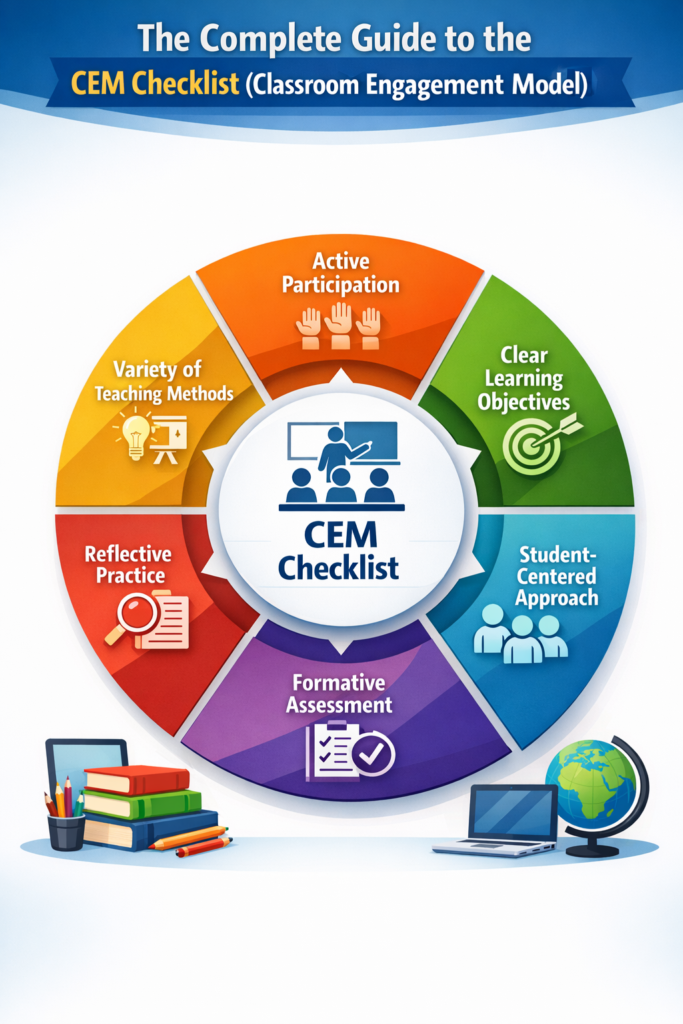
CEM Checklist
| Component | Description |
|---|---|
| Active Participation | Encouraging student involvement through interactive activities, discussions, and hands-on learning. |
| Variety of Teaching Methods | Using different approaches, such as group work, presentations, or multimedia, to appeal to diverse learning styles. |
| Clear Learning Objectives | Ensuring that students understand the purpose of the lesson and the goals they are expected to achieve. |
| Student-Centered Approach | Focusing on the needs and interests of the students to make learning relevant and engaging. |
| Formative Assessment | Using continuous feedback to assess student understanding and make necessary adjustments to the lesson. |
| Reflective Practice | Encouraging teachers to assess and adjust their teaching strategies based on student responses and feedback. |
The Classroom Engagement Model (CEM) checklist is an essential tool for any educator looking to boost student engagement and improve learning outcomes. By focusing on active participation, using a variety of teaching methods, and ensuring that lessons are relevant and student-centered, teachers can create a dynamic and effective classroom environment. With the CEM checklist, teachers are equipped to meet the diverse needs of their students and foster a more engaging learning experience. Incorporating this model into your teaching practice can lead to more interactive, engaging, and effective lessons. By continuously reflecting on and adapting your approach, you can create a classroom that promotes deeper learning and fosters a lifelong love of learning. The CEM checklist offers a practical and flexible framework for teachers who are committed to enhancing student engagement and improving the overall learning experience.
Key Strategies for Effective Engagement in the Classroom
- Engaging students is at the heart of the CEM checklist. It’s not just about delivering content it’s about making that content interactive and engaging. To truly captivate students, teachers must design lessons that actively involve them in the learning process. This includes the use of group activities, discussions, and hands-on learning experiences that allow students to apply the material in practical ways.
- The CEM checklist also emphasizes the importance of variety in teaching methods. A lesson that relies solely on lectures can easily lose students’ attention, but incorporating multimedia, collaborative tasks, and interactive exercises makes learning more dynamic. When students can approach the material from multiple angles, they are more likely to stay engaged and retain the information.
The Importance of Clear Learning Objectives
For students to be fully engaged, they need to know the purpose of the lesson and what they are expected to achieve. This is where clear learning objectives come in. When students understand the goals of a lesson, they are more motivated to participate and stay on track. The CEM checklist encourages educators to clearly outline lesson objectives at the beginning of each class, ensuring that students know what they’re working towards. Clear learning objectives also help teachers stay focused and organized. They provide a roadmap for the lesson and allow teachers to measure progress effectively. By continuously referring to the objectives, teachers can ensure that their lessons remain relevant and that students are making meaningful progress toward achieving the set goals.
Adapting to Student Needs: The Student-Centered Approach
- The CEM checklist encourages educators to adopt a student-centered approach to teaching. This means putting the needs and interests of students at the forefront of lesson planning. When students feel that the material is relevant to their lives, they are more likely to be engaged and motivated to participate.
- By considering the individual needs of students, teachers can differentiate instruction and offer various learning experiences that suit different learning styles. Whether through independent projects, collaborative tasks, or multimedia presentations, the student-centered approach ensures that all students have the opportunity to engage with the content in a way that makes sense to them.
Reflecting on Teaching Practices
One of the key elements of the Classroom Engagement Model is reflective practice. It encourages teachers to regularly evaluate their teaching methods and assess whether they are effectively engaging students. By asking questions such as Are students actively participating? and What strategies worked well today? teachers can make continuous improvements to their lessons. Reflection also allows teachers to adapt their teaching to better suit the needs of their students. If something isn’t working, they can try new techniques or adjust the lesson plan to better meet the learning goals. This process of continuous improvement is what makes the CEM checklist so valuable it empowers teachers to be responsive and flexible, ensuring that every lesson is as engaging and effective as possible.
Incorporating Technology into the Classroom
- Incorporating technology into lessons is another vital component of the CEM checklist. With the rise of digital learning tools, educators now have the opportunity to make lessons more interactive and engaging. Whether it’s through online quizzes, educational apps, or video presentations, technology offers a wealth of resources that can enhance the learning experience.
- However, it’s important to use technology strategically. The CEM checklist advises teachers to choose tools that align with the lesson objectives and enhance student understanding. When used effectively, technology can provide students with a more immersive learning experience, but it should never replace face-to-face interaction or traditional teaching methods.
Reflective Practice: The Key to Continuous Improvement
- Reflective practice is a cornerstone of the Classroom Engagement Model. By consistently evaluating their teaching methods, educators can ensure that their lessons remain effective and engaging. This ongoing process of self-assessment helps teachers identify areas where they can improve and refine their approaches for the future. Whether it’s through student feedback, peer evaluations, or self-reflection, taking time to assess the effectiveness of each lesson is essential for creating an environment where students are actively engaged and motivated to learn.
- Reflection also provides teachers with the opportunity to test new strategies and innovative techniques. By experimenting with different teaching methods and adjusting lessons based on student needs, educators can create a dynamic and adaptable classroom environment. In the long run, this fosters a culture of continuous improvement, benefiting both teachers and students.
The Role of Formative Assessment in Engagement
Formative assessment plays a vital role in ensuring that students are consistently engaged throughout the learning process. Unlike summative assessments, which typically occur at the end of a unit or semester, formative assessments are conducted during the lesson to gauge student understanding. This continuous feedback loop allows teachers to make real-time adjustments to their teaching methods, helping to keep students on track and engaged. The CEM checklist emphasizes the importance of using a variety of formative assessment techniques, such as quizzes, polls, peer reviews, and class discussions. These methods not only provide valuable insights into student comprehension but also help reinforce learning by encouraging active participation. By regularly assessing student understanding, teachers can ensure that no one falls behind and that everyone remains engaged throughout the lesson.
FAQs on CEM Checklist
1. What is the Classroom Engagement Model (CEM)?
The Classroom Engagement Model (CEM) is a framework designed to help teachers create engaging and interactive lessons. It focuses on student participation, diverse teaching methods, and clear learning objectives to enhance the learning experience.
2. How does the CEM checklist improve classroom engagement?
The CEM checklist helps teachers create lessons that are dynamic and student-centered. It emphasizes active participation, the use of various teaching methods, and continuous reflection on teaching practices, all of which contribute to increased student engagement.
3. Can the CEM checklist be used in all types of classrooms?
Yes, the CEM checklist is versatile and can be applied to a variety of classroom settings, from elementary schools to higher education. It is adaptable to different subjects and grade levels, making it a valuable tool for all educators.
4. How can teachers incorporate technology into the CEM framework?
Teachers can use technology to make lessons more interactive and engaging by incorporating digital tools like educational apps, online quizzes, and multimedia presentations.