
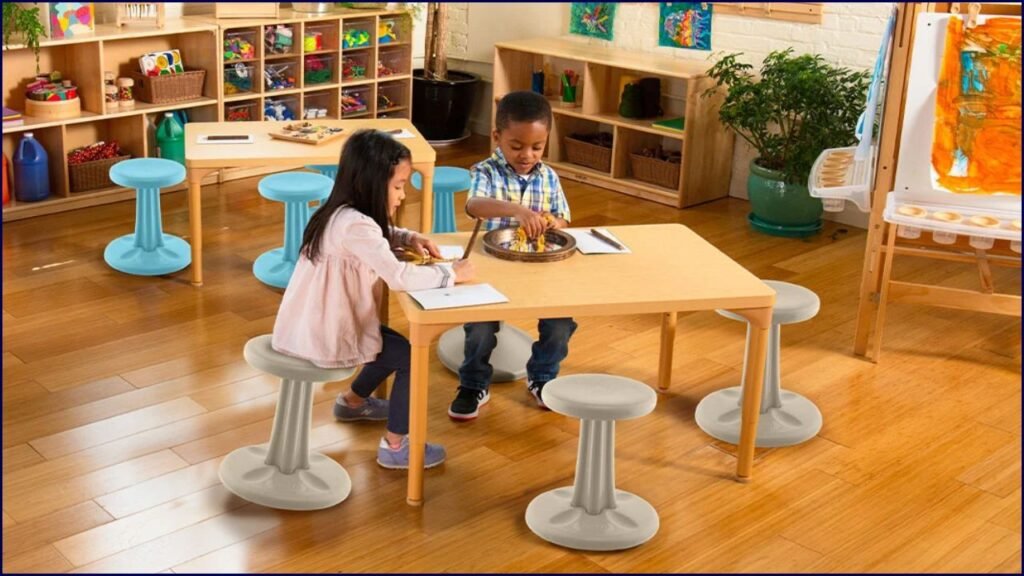
Choosing the right seating options for preschoolers has become a growing priority in early childhood education, healthcare, and parenting. As classrooms become more inclusive and developmentally informed, seating is no longer viewed as a neutral piece of furniture. Instead, it is recognized as a tool that can shape posture, attention, behavior, and learning outcomes.
In 2025, adaptive seating reflects a broader understanding of how young children sit, move, and learn. Educators and therapists increasingly agree that one-size-fits-all chairs do not meet the physical or sensory needs of most preschoolers. This review examines current adaptive seating options, explains why they matter, and explores how thoughtful seating choices can support healthy development during the most critical learning years.
Table of Contents
Why Seating Matters in Early Childhood Development
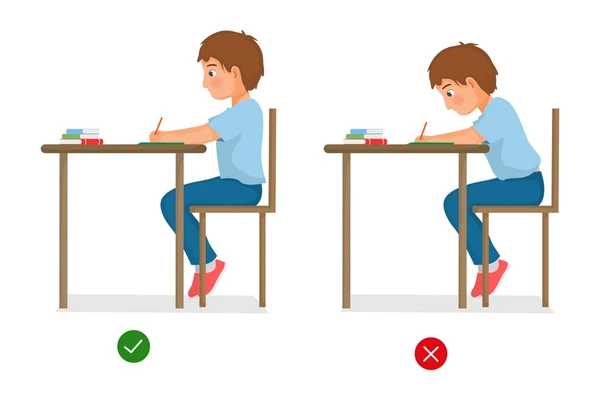
Preschoolers are still developing the physical systems required for upright sitting. Core muscles, balance control, and postural endurance are works in progress between ages three and five. Traditional chairs often assume adult-like stability, which many young children simply do not yet possess.
When seating does not support a child’s body, the result is often visible. Children may slump, wrap their legs around chair legs, lean on tables, or constantly shift position. These behaviors are often mistaken for inattention or poor behavior, when they are actually compensatory strategies to maintain balance and comfort.
Adaptive seating addresses this gap by providing:
- Improved alignment of hips, spine, and shoulders
- A stable base for fine motor activities
- Reduced physical fatigue
- Better access to learning materials
By supporting the body, seating frees cognitive resources for attention, communication, and problem-solving.
Understanding Adaptive Seating
Adaptive seating refers to seating solutions designed to accommodate variations in physical strength, sensory processing, attention regulation, and motor coordination. Unlike standard preschool chairs, adaptive seating intentionally modifies height, depth, firmness, or movement to meet developmental needs.
There are two broad categories:
Supportive Seating
These options prioritize stability and alignment. They are commonly used for children who:
- Have low muscle tone or weak trunk control
- Tire quickly when sitting
- Need help maintaining an upright posture
Examples include corner chairs, cube chairs, and high-back seating with firm bases.
Dynamic Seating
Dynamic seating allows controlled movement while seated. These options are often used for children who:
- Seek movement or sensory input
- Struggle to remain seated during activities
- Regulate attention better when allowed to move
Examples include wobble stools, therapy cushions, and flexible floor seating.
Most experts recommend a combination of both, rather than choosing one approach exclusively.
Age-Specific Seating Needs for Preschoolers
Ages 3–4: Building Stability
At this stage, children are developing basic postural control. Seating should:
- Provide foot support
- Encourage upright sitting
- Limit excessive movement
Floor-based seating, cube chairs, and supportive corner chairs are often appropriate.
Ages 4–5: Developing Endurance
Older preschoolers can tolerate longer seated activities but still benefit from:
- Adjustable seating heights
- Opportunities to change positions
- Periodic movement
This age group often responds well to mixed seating environments that include both traditional chairs and dynamic options.
Sensory Processing and Seating
Many preschoolers experience differences in how they process sensory information, including movement, pressure, and body position. Seating plays a direct role in sensory regulation.
- Firm seating provides deep pressure and stability, which can be calming.
- Movable seating offers vestibular and proprioceptive input, which can help alert or organize the nervous system.
- Floor seating allows children to use their whole body for balance, often improving comfort.
Importantly, no single seating type works for all children. What regulates one child may overstimulate another. Effective environments offer choice and flexibility, allowing children to gravitate toward what meets their needs.
Review of Common Adaptive Seating Options
Corner Chairs and Floor Sitters
These chairs support the body from multiple sides, promoting upright posture. They are commonly used for group activities, therapy sessions, or independent play. Their strength lies in stability, but they may limit movement for children who need sensory input.
Cube Chairs
Cube chairs sit low to the ground and often include armrests. They provide a sense of enclosure and grounding, which many children find calming. They are particularly effective for reading, quiet play, or transitions.
Wobble Stools and Cushions
These options allow subtle movement while seated. When used appropriately, they can improve engagement and reduce the need for constant position changes. However, they require supervision and clear expectations to ensure safety.
Adjustable Child Chairs
Height-adjustable chairs with foot support can bridge the gap between adaptive and traditional seating. They work well in classrooms where space is limited or where flexibility is needed across age groups.
Classroom Design and Seating Layout
Seating does not exist in isolation. How it is arranged within a classroom affects its usefulness.
Effective classrooms often:
- Create defined seating zones (quiet, active, floor-based)
- Allow children to rotate seating during the day
- Avoid assigning seating permanently unless required
This approach recognizes that children’s needs change depending on time, task, and emotional state.
Cost, Access, and Equity Considerations
Adaptive seating can be expensive, creating access challenges for underfunded schools and families. However, not all effective solutions require high-cost equipment.
Low-cost strategies include:
- Floor mats with back support
- DIY footrests for standard chairs
- Rotating shared adaptive seating
Equitable access to supportive seating is increasingly viewed as an inclusion issue, not a luxury. When seating barriers are removed, participation increases for all children, not only those with identified needs.
Safety Standards and Red Flags
While adaptive seating offers benefits, improper use can create risks. Adults should watch for:
- Chairs that tip easily
- Seating that restricts movement excessively
- Poor fit that causes discomfort or pressure points
Children should always be able to:
- Place feet securely
- Exit the seat independently when appropriate
- Maintain clear breathing and head positioning
Regular monitoring and adjustment are essential as children grow.
Real-World Classroom Scenarios
In practice, adaptive seating often changes classroom dynamics. Teachers report that when children are physically comfortable:
- Transitions become smoother
- Group activities last longer
- Behavioral challenges decrease
For example, a child who previously left circle time repeatedly may remain engaged when seated in a supportive floor chair. Another child who struggled to focus during table work may benefit from a wobble cushion that allows movement without disruption.
These outcomes highlight that seating is not about control, but about enabling participation.
The Future of Preschool Seating
Looking ahead, adaptive seating is likely to become more integrated into mainstream classroom design. Emerging trends include:
- Modular furniture that adapts throughout the day
- Materials designed for sensory regulation
- Increased collaboration between educators, therapists, and designers
As understanding of early childhood development continues to grow, seating will increasingly be viewed as an active component of learning environments rather than passive furniture.
Conclusion
In 2025, seating options for preschoolers reflect a deeper understanding of how children learn through their bodies. Adaptive seating supports posture, comfort, and engagement while recognizing that movement and stability are both essential parts of development.
The most effective environments offer a range of seating options, guided by observation, flexibility, and respect for individual needs. When seating supports the body, it supports learning—and creates classrooms where more children can succeed.