


Educators across the United States and other advanced education systems are increasingly embracing the Yes environment in the classroom, a structured approach that reduces unnecessary prohibitions in favor of clear expectations, thoughtful design, and positive guidance. Backed by decades of developmental research, the strategy reflects a broader shift away from reactive discipline toward prevention, autonomy, and student-centered learning.
Defining the “Yes” Environment in the Classroom
A Yes environment in the classroom is a teaching and design philosophy that prioritizes proactive planning over constant correction. Instead of repeatedly telling students what they cannot do, teachers structure physical spaces, routines, and expectations so that students are more likely to succeed independently.
The concept does not eliminate rules or discipline. Rather, it reduces the frequency with which teachers must verbally intervene by anticipating common behavioral challenges.
“Every ‘no’ is a moment of friction,” said Dr. Laura McKenzie, a professor of educational psychology at the University of Wisconsin. “The goal is not permissiveness. It’s alignment between the environment and student development.”
Historical Roots and Educational Theory
While the term “Yes environment” gained popularity in early childhood education, its theoretical foundations date back more than a century. Progressive education theorists such as John Dewey emphasized learning environments that support exploration within clear boundaries.
In the mid-20th century, Maria Montessori’s work further advanced the idea that carefully prepared environments reduce behavioral conflict. More recently, these ideas have been reinforced by cognitive science and behavioral psychology.
According to the National Association for the Education of Young Children (NAEYC), well-designed learning environments support executive function, emotional regulation, and intrinsic motivation—skills linked to long-term academic success.
Why Educators Are Moving Away From Constant “No”
Evidence From Behavioral Research
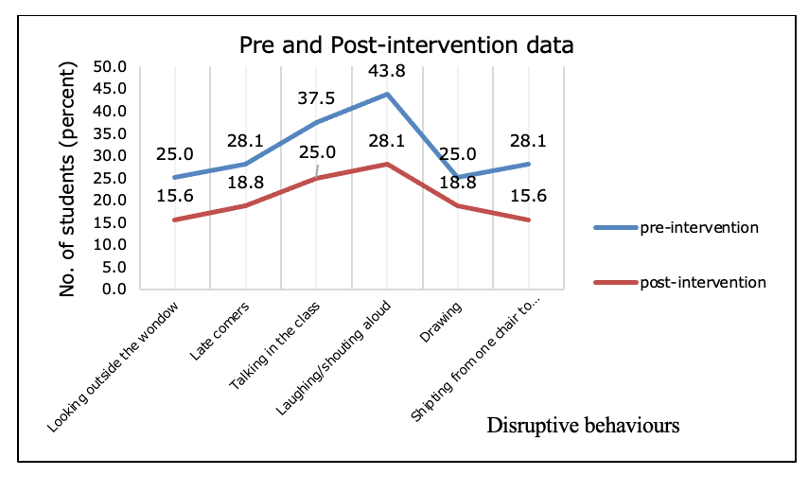
Multiple peer-reviewed studies indicate that classrooms dominated by negative commands experience higher rates of disruption and disengagement. A 2021 meta-analysis published in School Psychology Review found that preventive classroom strategies reduced behavioral incidents by up to 30 percent.
These findings align closely with Positive Behavioral Interventions and Supports (PBIS), a framework promoted by the U.S. Department of Education and adopted by thousands of school districts nationwide.
PBIS emphasizes teaching expectations explicitly, reinforcing positive behavior, and addressing problems through systems rather than punishment.
Teacher Burnout and Classroom Climate
The shift is also driven by concerns about teacher retention. Surveys conducted by the RAND Corporation and the National Education Association consistently identify classroom management as a leading source of educator stress.
“When teachers spend most of the day correcting behavior, instructional quality suffers,” said Dr. Michael Tan, a senior policy analyst at RAND. “Environmental design can reduce that cognitive load.”
Educators interviewed by education researchers report fewer power struggles and improved classroom tone after adopting Yes environment strategies.
What a Yes Environment Looks Like in Practice
Physical Space and Materials
In a Yes environment, classrooms are intentionally organized. Supplies are reachable, seating is flexible, and pathways allow movement without disruption. Visual cues replace verbal reminders wherever possible.
For example:
- Clearly labeled storage reduces conflicts over materials
- Defined work areas minimize wandering
- Visual schedules reduce anxiety around transitions
These design elements are particularly effective for younger students and those with learning differences.
Language and Instruction
Instructional language shifts from prohibition to clarity. Instead of “Stop talking,” teachers might say, “Voices off during independent work.”
According to the American Psychological Association, positively framed directives are processed more efficiently by children and reduce oppositional responses.
“Clear expectations eliminate guesswork,” said McKenzie. “Children respond better when they know exactly what success looks like.”
Impact on Equity and Inclusion
Advocates argue that Yes environments can help address longstanding disparities in school discipline. Data from the U.S. Department of Education show that students of color and students with disabilities are disproportionately disciplined for subjective infractions such as “defiance.”
By reducing subjective corrections, Yes environments may limit opportunities for implicit bias to influence discipline decisions.
Special education researchers also note benefits for students with attention-deficit/hyperactivity disorder (ADHD) or autism spectrum disorder, who often struggle with impulsivity and sensory regulation.
“When environments are predictable and accessible, students don’t have to fight the system to participate,” said Dr. Aisha Coleman, a special education consultant in Maryland.
International Perspectives
While the term “Yes environment” is most common in North America, similar principles appear globally.
In Finland, widely regarded for its education system, classrooms emphasize autonomy, minimal testing, and student responsibility. Teachers rely heavily on environmental cues and trust-based relationships rather than strict behavioral enforcement.
In Japan, students are taught from an early age to manage classroom routines collectively, reducing the need for teacher intervention.
“These systems demonstrate that structure and freedom are not opposites,” said Tan. “They reinforce each other.”
Skepticism and Implementation Challenges
Despite growing support, some educators caution that the approach is often misunderstood or poorly implemented.
“Without training, a Yes environment can quickly turn into a free-for-all,” said Thomas Reed, a middle school teacher with 25 years of experience. “Design alone doesn’t replace accountability.”
Critics emphasize that the approach requires:
- Strong routines
- Consistent follow-through
- Administrative support
- Professional development
Education researchers agree that success depends on fidelity of implementation rather than the philosophy itself.
Policy and Professional Development Implications
Several school districts now include Yes environment principles in teacher training programs. State education agencies in California, Massachusetts, and Washington have incorporated elements into classroom management guidance.
However, experts note that systemic adoption requires time and resources.
“You can’t redesign classrooms overnight,” said Coleman. “Districts need to invest in training, materials, and coaching.”
Looking Ahead
As schools continue to recover from pandemic-era disruptions, many administrators see Yes environments as part of a broader rethinking of student engagement and well-being.
Ongoing longitudinal studies are examining whether early exposure to these environments correlates with long-term academic performance and social development.
“The evidence is pointing in a consistent direction,” said McKenzie. “When environments are designed for success, behavior improves naturally.”