

Few natural events capture human imagination quite like a total solar eclipse. The sudden dimming of daylight, the eerie twilight glow in the middle of the day, and the brief appearance of the Sun’s glowing corona have inspired awe, fear, and fascination for thousands of years. Now, astronomers have confirmed something truly historic: the longest total solar eclipse of the century has an official date, and when it happens, large parts of the world will experience the unforgettable moment when day turns into night.
This rare celestial event is already being described as a once-in-a-lifetime experience for most people alive today. Scientists, skywatchers, photographers, and travelers are all paying close attention, because this eclipse will not be just another astronomical curiosity—it will be a defining cosmic moment.
Table of Contents
What Makes This Eclipse So Special
Not all solar eclipses are created equal. While partial and annular eclipses occur more frequently, a total solar eclipse, where the Moon completely covers the Sun, is far rarer. Even more unusual is a total eclipse that lasts for an exceptionally long time.
This upcoming eclipse has earned its title because the period of totality will be longer than any other total solar eclipse occurring in this century. During totality, the Moon perfectly aligns with the Sun and Earth, blocking sunlight entirely for several minutes. In this case, that darkness will stretch close to the theoretical maximum possible for a total solar eclipse.
The reason lies in a precise cosmic coincidence. At the time of the eclipse, the Moon will be near its closest point to Earth, known as perigee, making it appear slightly larger in the sky. At the same time, the Earth will be relatively far from the Sun, making the Sun appear slightly smaller. This perfect alignment allows the Moon to cover the Sun more completely and for a longer duration.
The Official Date and Why Astronomers Are Certain
Astronomers calculate eclipse dates centuries in advance using extremely precise mathematical models of planetary motion. Thanks to these calculations, the official date of the longest total solar eclipse of the century is now firmly established.
On that day, the alignment of the Sun, Moon, and Earth will be so exact that scientists can predict the timing down to the second. This certainty allows researchers, space agencies, and observatories around the world to plan years ahead. It also gives the public plenty of time to prepare, travel, and learn how to safely experience the event.
The confirmation of the date has sparked excitement not only among astronomers but also among educators and science communicators, who see this eclipse as a powerful opportunity to spark global interest in astronomy.
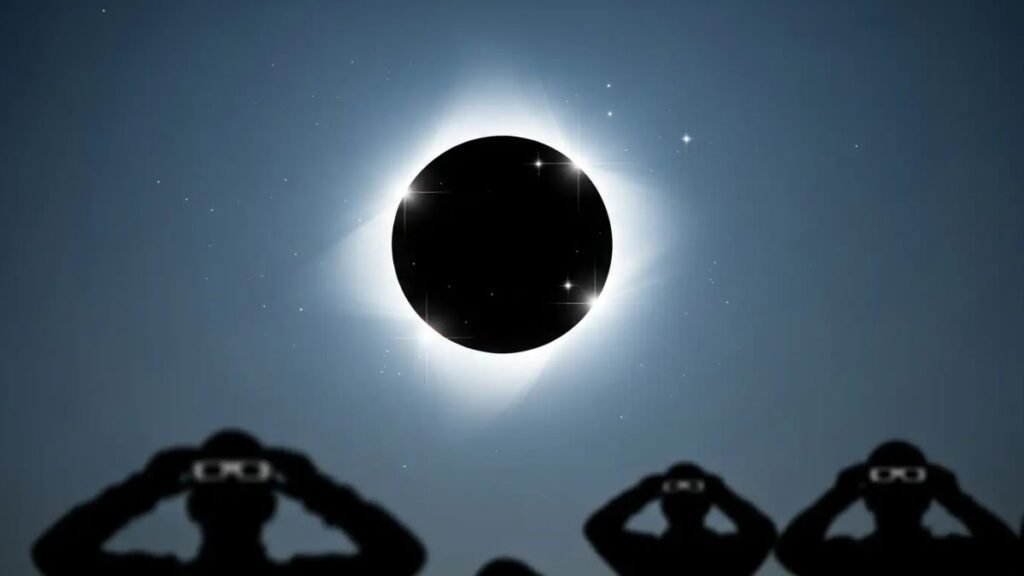
When Day Truly Turns to Night
What makes a total solar eclipse so emotionally powerful is how suddenly and dramatically the environment changes. As the Moon begins to cover the Sun, daylight slowly dims. Temperatures drop, shadows sharpen, and the world takes on an unnatural hue.
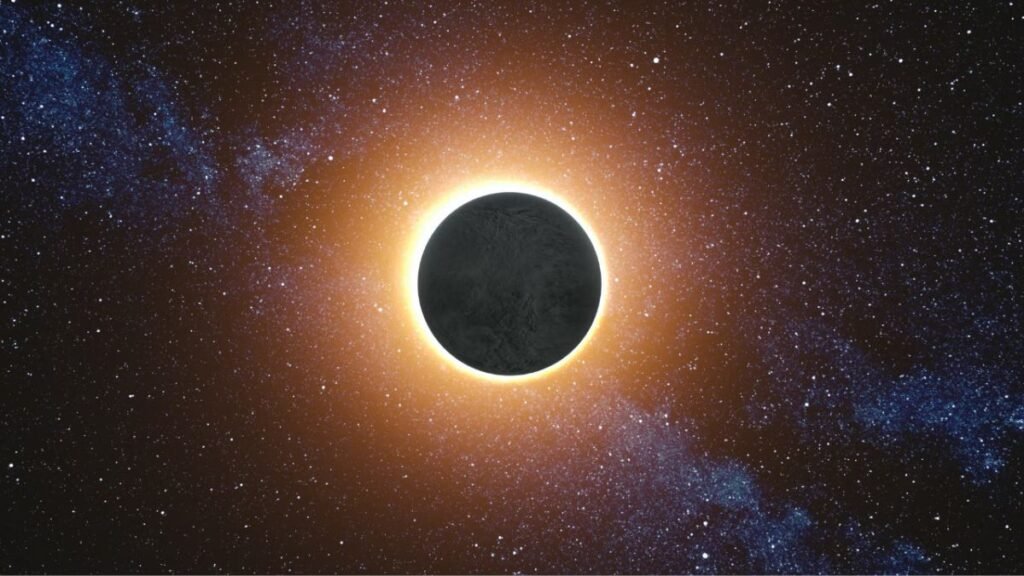
Then, during totality, day abruptly becomes night. The sky darkens enough for stars and planets to appear. Birds may fall silent or return to their nests, and nocturnal animals can become briefly active. For a few minutes, the Sun’s brilliant disk disappears, replaced by its delicate corona—a ghostly halo of plasma stretching millions of kilometers into space.
This transformation is not gradual like sunset. It is sudden, startling, and unforgettable, which is why people who have witnessed a total solar eclipse often describe it as one of the most profound experiences of their lives.
Where the Eclipse Will Be Visible
As with all total solar eclipses, this one will have a path of totality, a relatively narrow band across the Earth’s surface where the Sun will be completely obscured. Outside this path, observers will see only a partial eclipse.
The exact route of the path of totality spans multiple regions, crossing land and ocean alike. While not everyone on Earth will experience full darkness, millions of people will live within or near the path. For those willing to travel, positioning oneself within this narrow corridor will be essential to witnessing the full spectacle.
Astronomers emphasize that even a small distance outside the path of totality dramatically changes the experience. Only within that path does the sky fully darken and the corona become visible.
A Rare Opportunity for Science
Beyond its visual beauty, the longest total solar eclipse of the century presents an extraordinary opportunity for scientific research. During totality, the Sun’s corona becomes visible without specialized instruments, allowing scientists to study its structure, temperature, and behavior.
Solar eclipses have historically led to major scientific breakthroughs. In the past, they helped confirm Einstein’s theory of general relativity and advanced understanding of solar physics. This upcoming eclipse will allow researchers to deploy modern instruments, drones, high-altitude balloons, and satellites to gather unprecedented data.
Scientists are particularly interested in how the Sun’s magnetic field behaves during prolonged totality, as this knowledge can improve understanding of space weather, which affects satellites, power grids, and communication systems on Earth.
Why This Eclipse Won’t Be Repeated Anytime Soon
While total solar eclipses occur somewhere on Earth every one to two years on average, eclipses of this length are extremely rare. The precise alignment required depends on orbital mechanics that shift over time.
After this event, it will take many decades—possibly centuries—before another eclipse of similar duration occurs. That rarity is why astronomers emphasize that this eclipse is truly a once-in-a-century event. For most people, it will be the longest and most dramatic total solar eclipse they will ever have the chance to see.
Cultural and Emotional Impact
Throughout history, eclipses have carried deep cultural significance. Ancient civilizations often saw them as omens or messages from the gods. Today, while science explains the mechanics, the emotional impact remains just as strong.
Modern observers often describe a sense of humility and connection to the universe during a total eclipse. Seeing the Sun disappear reminds people of Earth’s place in a vast cosmic system. The upcoming eclipse, with its exceptional duration, is expected to amplify those feelings.
Communities within the path of totality are already preparing for increased tourism, educational events, and public gatherings. Schools, museums, and science centers plan to use the eclipse as a teaching moment, inspiring curiosity in both children and adults.
How to Watch the Eclipse Safely
While the moment of totality is safe to view with the naked eye, the phases before and after require proper eye protection. Looking directly at the Sun without certified solar filters can cause serious and permanent eye damage.
Experts stress the importance of using approved eclipse glasses or indirect viewing methods. As excitement builds closer to the event, authorities are likely to issue repeated reminders about eye safety to ensure everyone can enjoy the eclipse without risk.
Preparing for a Once-in-a-Lifetime Experience
As the official date approaches, interest in the longest total solar eclipse of the century will only grow. Travel plans, viewing guides, and scientific broadcasts will become increasingly common. For many people, witnessing this event will be a personal milestone, remembered for decades.
Astronomers encourage those interested to start learning now—not just about when and where to watch, but also about why eclipses happen. Understanding the science behind the spectacle can make the experience even more meaningful.
A Moment the World Will Share
When the day finally arrives, millions of people across different countries and cultures will look up at the same sky, united by a shared moment of wonder. For a few extraordinary minutes, daylight will vanish, and the universe will remind humanity of its incredible precision and beauty.
The confirmation of the official date marks the beginning of a global countdown. When the longest total solar eclipse of the century unfolds, it will not just be an astronomical event—it will be a shared human experience, one that turns day into night and leaves a lasting impression on everyone lucky enough to witness it.
FAQs
Q1. When will the longest total solar eclipse of the century occur?
The eclipse now has an officially confirmed date, announced by astronomers, and will take place later this century.
Q2. Why is this solar eclipse considered the longest of the century?
Because the period of total darkness will last longer than any other total solar eclipse occurring this century.
Q3. Will everyone be able to see the eclipse?
No, only people located within the path of totality will experience complete darkness, while others will see a partial eclipse.