
Classrooms today look very different from what they did even a decade ago. Students are more diverse, expectations are higher, and attention spans are constantly challenged by digital distractions. In this environment, teaching can no longer rely on long lectures and occasional questions. To truly reach learners, teachers need strategies that keep students mentally present and actively involved.

Opportunities To Respond is one of those strategies that quietly transforms instruction without requiring complicated systems or extra materials. At its heart, Opportunities To Respond shifts learning from something students watch to something they do. Instead of a few confident students answering questions while others sit back, this approach invites everyone to participate throughout the lesson. When students respond often, they think more deeply, stay focused longer, and build stronger connections to the content being taught.
Opportunities To Respond refers to the number of times a teacher prompts students to actively answer or demonstrate understanding during instruction. These responses can take many forms, including speaking, writing, signaling, or moving. The key idea is simple: learning improves when students are asked to engage frequently and intentionally. This strategy works because it keeps students cognitively involved. Rather than passively listening, students are regularly required to retrieve information, apply skills, or make decisions. Over time, consistent use of Opportunities To Respond strengthens comprehension, improves memory, and builds academic confidence. It also gives teachers immediate insight into how well students are understanding the lesson, allowing for quick adjustments before misunderstandings grow.
Table of Contents
Opportunities to Respond
| Category | Description |
|---|---|
| Meaning | A teaching approach that increases active student participation |
| Main Purpose | Improve engagement, understanding, and learning outcomes |
| Response Methods | Verbal, written, physical, or visual |
| Common Settings | General classrooms, special education, intervention programs |
| Key Outcomes | Higher achievement, better focus, reduced behavior issues |
Opportunities To Respond is a simple yet powerful strategy that transforms classrooms into active learning spaces. By increasing how often students participate, teachers move beyond one-way instruction and create meaningful learning experiences that support understanding, behavior, and confidence. Whether through speaking, writing, or movement, consistent use of Opportunities To Respond keeps students engaged and learning at a deeper level. When thoughtfully planned and regularly practiced, this approach becomes a natural part of effective teaching and a key driver of student success.
Why Opportunities To Respond Matter
Active participation is one of the strongest predictors of student success. When students respond frequently, they are more likely to stay attentive and process information deeply. Opportunities To Respond supports this by breaking lessons into smaller, interactive moments that require thinking rather than passive listening. Another important reason Opportunities To Respond matters is classroom behavior. Many behavior challenges stem from boredom or disengagement. When students are actively involved, there is less room for off-task behavior. Teachers who consistently use Opportunities To Respond often notice smoother transitions, fewer disruptions, and a more positive classroom climate overall.
Types Of Opportunities To Respond
Verbal Responses
- Verbal responses are one of the most familiar forms of Opportunities To Respond. These include answering questions aloud, participating in discussions, or responding together as a group. Choral responding, where the entire class answers at the same time, is especially effective for reinforcing key concepts and vocabulary.
- To make verbal responses effective, questions should be clear, concise, and directly tied to lesson goals. Teachers should also vary who responds to avoid relying on the same few students.
Written Responses
- Written responses allow students to think before answering and are ideal for checking understanding. These may include short written answers, note-taking, quick reflections, or responses on whiteboards or paper.
- Written Opportunities To Respond are particularly helpful for students who need extra processing time or feel uncomfortable speaking in front of others. They also provide teachers with visible evidence of learning, making it easier to identify gaps and address them quickly.
Physical And Gestural Responses
- Physical responses involve movement or gestures such as raising hands, using response cards, giving thumbs up or down, or moving to different areas of the room. These responses are quick, engaging, and effective for fast comprehension checks.
- For younger students and kinesthetic learners, physical Opportunities To Respond can dramatically increase attention and energy while still reinforcing academic content.
Recommended Rates Of Opportunities To Respond
Frequency plays a major role in how effective Opportunities To Respond can be. Too few responses lead to disengagement, while too many poorly planned prompts can overwhelm students.
General guidelines suggest:
- During new instruction: 3 to 5 response opportunities per minute
- During practice or review: 8 to 12 response opportunities per minute
These rates help maintain engagement while allowing time for explanation and feedback. Teachers should adjust based on student age, subject matter, and lesson complexity.
How Teachers Can Increase OTR In The Classroom
- Increasing Opportunities To Respond does not require major changes to curriculum or teaching style. Small, intentional shifts can make a big difference.
- Planning ahead is one of the most effective strategies. Teachers can build response opportunities directly into lesson plans by identifying where questions, checks for understanding, or activities naturally fit. Using simple tools such as response cards, whiteboards, or structured turn-and-talk activities can also help involve every student.
- Replacing general questions with specific prompts is another powerful approach. Instead of asking if students understand, teachers can ask them to show their understanding through a quick response. This ensures participation and provides immediate feedback.
OTR in Special Education and Behavior Support
- Opportunities To Respond is especially valuable in special education and behavior support settings. Many students with learning or behavioral challenges benefit from clear expectations and frequent chances to succeed.
- High rates of Opportunities To Respond help these students stay focused and reduce frustration. When paired with clear prompts and immediate feedback, OTR builds confidence and reinforces positive behavior. For this reason, it is often included as a core component of behavior intervention plans and individualized instruction.
Common Mistakes to Avoid
While Opportunities To Respond is highly effective, it must be implemented thoughtfully. One common mistake is calling on the same students repeatedly, which limits engagement for others. Another issue is asking questions that are too complex or unclear, causing confusion rather than understanding. Teachers should also avoid using response opportunities that do not align with learning objectives. Every response should serve a clear instructional purpose and support the lesson’s goals.
Benefits Of Consistent Opportunities To Respond
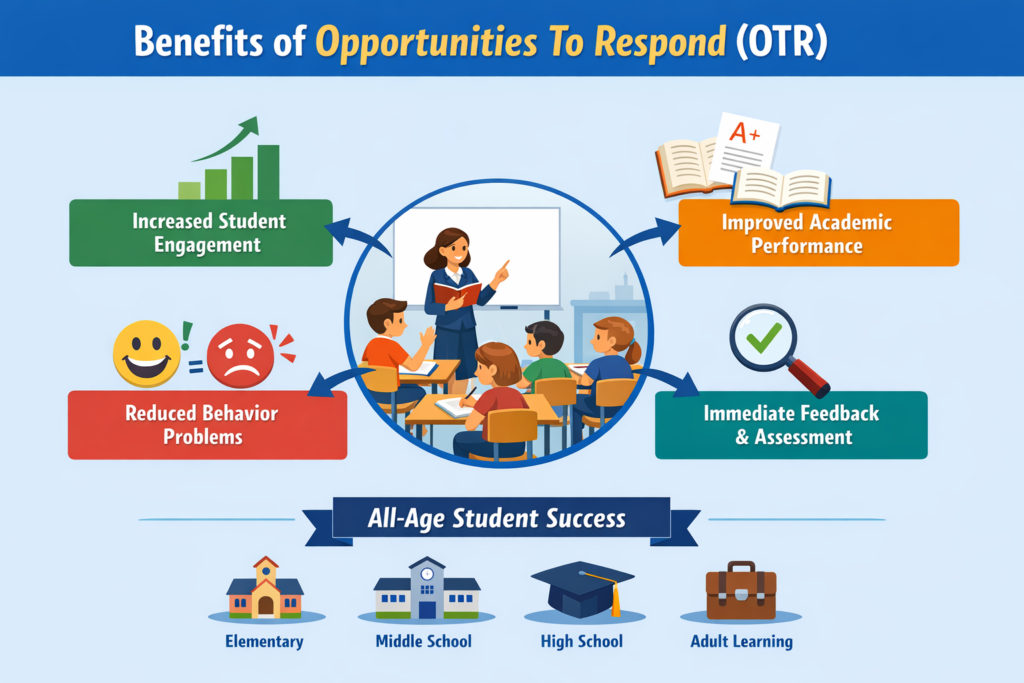
- When used consistently, Opportunities To Respond offers long-term benefits for both students and teachers. Students become more confident, attentive, and accountable for their learning. They also develop stronger thinking skills through frequent practice and feedback.
- Teachers benefit as well. With regular student responses, it becomes easier to monitor understanding, adjust pacing, and make informed instructional decisions. Over time, classrooms become more interactive, supportive, and productive learning environments.
FAQs on Opportunities to Respond
1. What Are Opportunities To Respond In Simple Terms
Opportunities To Respond means giving students frequent chances to actively participate during a lesson. Instead of only listening, students are asked to answer questions, write responses, use gestures, or take part in short activities that show their understanding.
2. How Do Opportunities To Respond Improve Student Learning
Opportunities To Respond improve learning by keeping students mentally engaged. When students respond often, they process information more deeply, remember concepts better, and are more likely to stay focused throughout the lesson.
3. Can Opportunities To Respond Help With Classroom Behavior
Yes, Opportunities To Respond can significantly reduce behavior problems. Engaged students have less time to become bored or disruptive, which leads to improved focus, fewer interruptions, and a more positive classroom environment.
4. Are Opportunities To Respond Only For Younger Students
No, Opportunities To Respond are effective for all age groups. While commonly used in elementary classrooms, they are equally valuable in middle school, high school, and even adult learning settings.