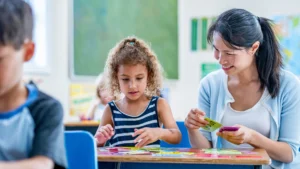

In today’s educational environment, creating an inclusive classroom is more important than ever. With diverse student populations, educators are increasingly tasked with ensuring that all students, regardless of their abilities or backgrounds, have access to a high-quality education. Paraprofessionals play a pivotal role in making this happen. By supporting both students and teachers, paraprofessionals help facilitate an inclusive learning experience for all. A comprehensive paraprofessional training guide is essential in ensuring that these professionals are equipped with the tools, knowledge, and strategies needed to succeed in fostering inclusion in the classroom. This guide will explore the importance of paraprofessional training and the role these educators play in creating supportive, inclusive learning environments. When paraprofessionals receive targeted paraprofessional training for inclusion, they gain the confidence and skills needed to adapt their approach to meet the individual needs of students with disabilities or other learning challenges. The goal is to create a welcoming, inclusive classroom where all students can engage with the curriculum and participate meaningfully in class activities. Whether paraprofessionals are helping students with special education needs, emotional challenges, or language barriers, their role is essential to building a classroom environment that values every student’s potential. Let’s dive deeper into how paraprofessional training supports inclusion and the vital skills needed to make it effective.
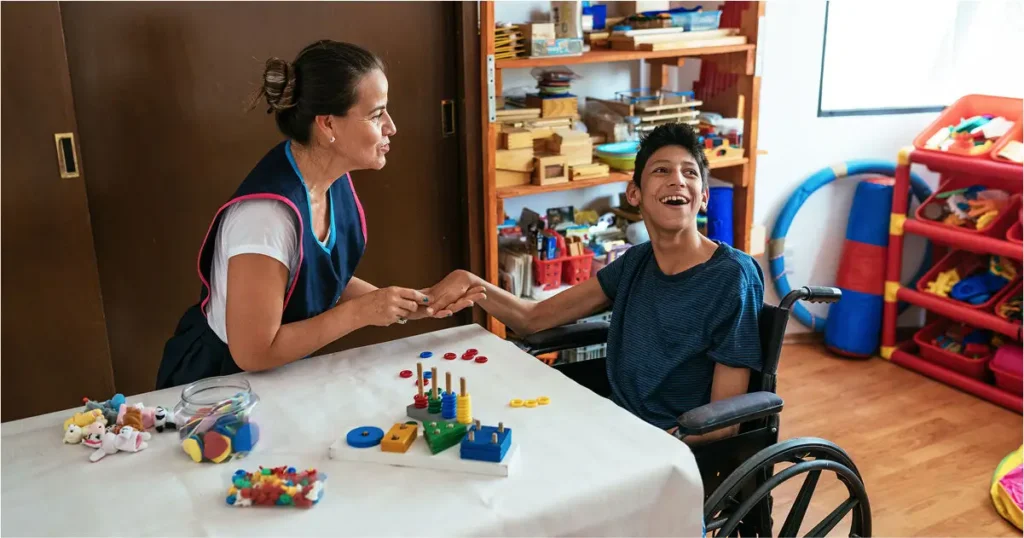
Paraprofessionals are often seen as the unsung heroes in inclusive classrooms. Their role is multi-faceted, and their contribution extends far beyond simple classroom support. Paraprofessionals assist with classroom management, work one-on-one with students, and help implement individualized education programs (IEPs) for students who need them. Their main goal is to ensure that all students regardless of ability can access the curriculum and engage in learning activities. An effective paraprofessional training guide will focus on how these professionals can provide tailored support to students, particularly those with disabilities. This training helps paraprofessionals understand the diverse needs of their students and equips them with strategies to adapt instruction, manage behavior, and encourage positive social interactions. Ultimately, paraprofessionals play an integral role in helping students feel like they belong in the classroom, contributing to an overall positive learning environment.
Table of Contents
Paraprofessional Training Guide
| Key Aspect | Description |
|---|---|
| Training Focus | Understanding inclusion, implementing individualized strategies, fostering a supportive environment for all students |
| Role of Paraprofessionals | Provide one-on-one or small group support, assist with classroom management, help implement IEPs |
| Inclusion Strategies | Differentiated instruction, behavioral supports, adapting materials and activities |
| Collaboration | Working with teachers, students, and specialists to ensure inclusive practices are followed |
| Skills Development | Communication, empathy, understanding disabilities, classroom management, adapting curriculum |
Creating an inclusive classroom requires the collaboration of many individuals, and paraprofessionals are an integral part of that process. Through paraprofessional training for inclusion, these professionals develop the skills needed to meet the unique needs of students with disabilities or other challenges. Paraprofessionals play a key role in helping students access the curriculum, participate socially, and develop the skills they need to succeed academically and emotionally. With the right training, paraprofessionals can create a classroom environment where every student has the opportunity to thrive.
Understanding Inclusion in Education
- Inclusion in education refers to integrating students with disabilities or special needs into general education classrooms alongside their peers. The aim is to ensure that students with diverse needs are provided with equal opportunities to succeed academically and socially. For paraprofessionals, supporting inclusion means understanding and addressing the specific needs of students with disabilities or other challenges while helping them navigate their educational journey.
- Paraprofessionals supporting inclusion need to be familiar with various strategies that allow students to engage with the curriculum at their own pace and in ways that accommodate their learning styles. This includes providing alternative formats for assignments, offering one-on-one support, and adjusting the environment to suit the specific needs of individual students. A paraprofessional’s role in inclusion goes beyond just academic support; they also help foster social inclusion by ensuring that students interact and collaborate with their peers in meaningful ways.
- The importance of inclusion cannot be overstated. When students with disabilities are included in general education classrooms, they not only benefit from exposure to the general curriculum but also have the opportunity to develop social and emotional skills in a diverse and supportive environment. Paraprofessionals https://x.com/inclusionoz/status/2013740882420228506?s=20play a key role in ensuring that all students have access to these benefits, regardless of their challenges.
Key Skills for Paraprofessionals Supporting Inclusion
To successfully support inclusive classrooms, paraprofessionals must develop several key skills. These include:
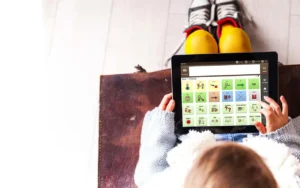
- Communication Skills: Effective communication is essential for paraprofessionals. This means being able to clearly convey instructions to students, collaborate with teachers and other staff, and communicate with parents when necessary. Paraprofessionals should also be skilled in non-verbal communication, as many students with disabilities may rely on gestures or visual cues to understand and express themselves.
- Behavior Management: Paraprofessionals are often responsible for managing student behavior, particularly in classrooms with students who experience emotional or behavioral challenges. Training in positive behavior intervention strategies, including how to reinforce positive behaviors and manage challenging ones, is critical for success. Paraprofessionals need to understand that behavior is often a form of communication and must approach behavior management with patience and consistency.
- Adaptability: Every student has unique needs, and a successful paraprofessional is one who can adapt their approach to meet those needs. This could mean modifying the curriculum, offering additional support, or using different teaching strategies depending on the student’s abilities and learning style. Adaptability is key in ensuring that students receive the support they need to thrive in the classroom.
- Collaboration: Paraprofessionals work closely with teachers, special education staff, and sometimes other professionals like speech therapists or occupational therapists. Training in collaboration ensures that paraprofessionals can effectively communicate with other team members, provide input into lesson planning, and understand how best to support students’ individual goals.
- Understanding Disabilities: A solid understanding of various disabilities is crucial for paraprofessionals. They must know how different disabilities such as autism spectrum disorder (ASD), ADHD, learning disabilities, or physical disabilities can affect a student’s learning and behavior. With this knowledge, paraprofessionals can more effectively support the students in their care.
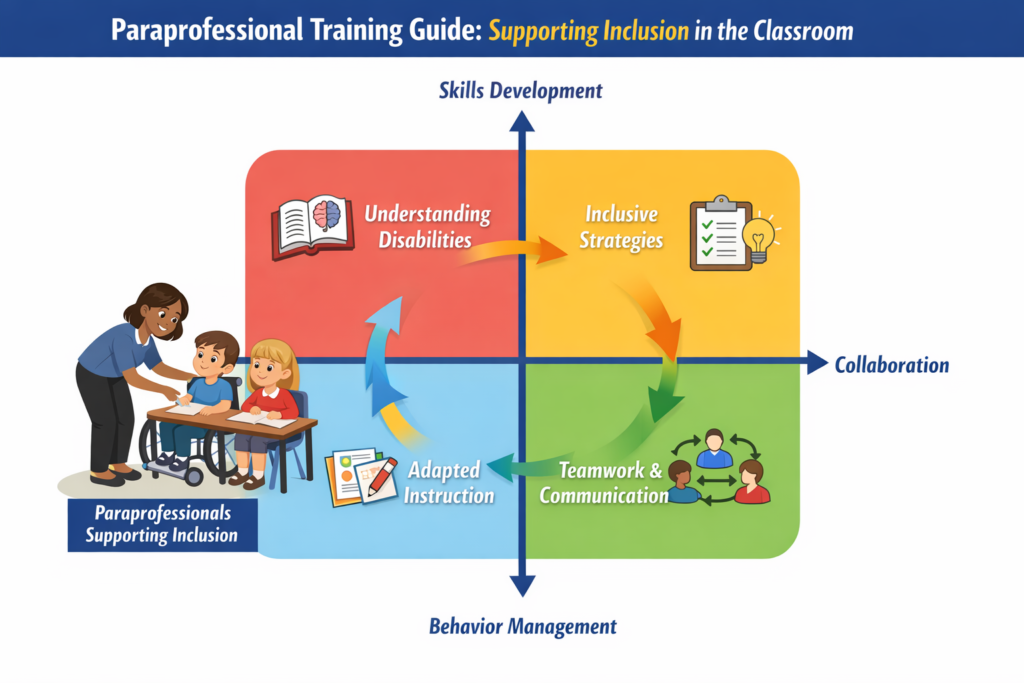
Training for Paraprofessionals: Key Areas of Focus
For paraprofessionals to be effective in supporting inclusion, training must cover several key areas. These areas ensure that paraprofessionals are prepared to work with diverse learners and contribute to an inclusive classroom environment.
- Inclusion Practices: One of the primary focuses of paraprofessional training should be teaching the fundamentals of inclusive education. Paraprofessionals need to understand what inclusion looks like and how they can support it. This includes familiarizing themselves with frameworks like Universal Design for Learning (UDL), which promotes a flexible approach to teaching that caters to the needs of all learners.
- Instructional Support: Paraprofessionals need to know how to assist with lesson delivery and modify instruction when needed. This could mean providing extra help to students during lessons, offering alternative forms of instruction, or helping students complete tasks. Paraprofessionals must be able to identify when students need additional support and know how to deliver it in a way that is both effective and appropriate.
- Behavioral Supports: Many students in inclusive classrooms may struggle with behavioral issues, which can impact their learning and the learning environment as a whole. Paraprofessionals should be trained in managing behavior using positive reinforcement strategies and de-escalation techniques. This training ensures that paraprofessionals can help students manage their emotions and behaviors in a constructive manner.
- Collaboration Skills: Effective collaboration is essential for paraprofessionals. They work closely with teachers, special education staff, and other professionals to ensure that students’ needs are being met. Training should focus on how paraprofessionals can work as part of a team, communicate effectively with others, and contribute to the development and implementation of Individualized Education Plans (IEPs) for students with special needs.
Practical Tips for Paraprofessionals in the Classroom
- Know the IEP: One of the most important tools a paraprofessional has is the Individualized Education Program (IEP). This document outlines the specific needs, accommodations, and goals for each student with disabilities. Paraprofessionals must familiarize themselves with the IEPs of the students they support so they can provide the necessary assistance and track progress.
- Be Patient and Positive: Paraprofessionals often work with students who experience frustration or challenges, and maintaining a positive, patient attitude is crucial. Encouragement and praise can go a long way in helping students feel confident and motivated to engage with the learning process.
- Stay Flexible: The needs of students can change day by day, so paraprofessionals must be adaptable. Whether it’s adjusting to different learning styles or responding to unexpected behavior, flexibility is key to supporting an inclusive classroom.
FAQs on Paraprofessional Training Guide
What is the role of paraprofessionals in an inclusive classroom?
Paraprofessionals assist students with diverse needs by providing one-on-one support, helping with classroom management, and assisting teachers with implementing individualized education plans.
What type of training do paraprofessionals receive to support inclusion?
Paraprofessionals receive training in inclusive education practices, behavior management, communication, collaboration with teachers, and how to assist with lesson modifications and accommodations.
How does paraprofessional training help students with disabilities?
Paraprofessional training ensures that educators can provide the right level of support to students with disabilities, helping them access the curriculum and engage with learning in meaningful ways.
What are the key skills needed for paraprofessionals in inclusive classrooms?
Effective communication, adaptability, behavior management, collaboration, and a deep understanding of disabilities are essential skills for paraprofessionals working in inclusive classrooms.