
The Pyramid Model for Social-Emotional Competence is a proven framework designed to help young children develop essential social and emotional skills. With a tiered approach to teaching social-emotional competence, it empowers educators and caregivers to support children in managing emotions, building relationships, and preventing challenging behaviors. As more professionals understand the importance of social-emotional development, the demand for Pyramid Model training continues to grow. As we move into 2025, and following the closure of the MNCoE (Military and National Center of Excellence), many are wondering where they can still access top-tier Pyramid Model training. The good news is, there are still plenty of excellent opportunities available. For educators, parents, and early childhood professionals, it’s critical to stay updated with the latest Pyramid Model training programs that help enhance their ability to support children’s social and emotional well-being.

Whether you’re just starting with the Pyramid Model or seeking advanced-level resources, finding high-quality training opportunities is key to implementing these strategies effectively. In 2025, even after the closure of the MNCoE, training opportunities for the Pyramid Model remain accessible across a variety of platforms. Whether you’re an educator working in a school, an early childhood provider, or a family support professional, you can find programs that suit your needs. These training programs are designed to help participants understand and implement the Pyramid Model effectively in their settings. Below are some of the most reliable sources for accessing Pyramid Model training.
Table of Contents
Pyramid Model Training in 2025
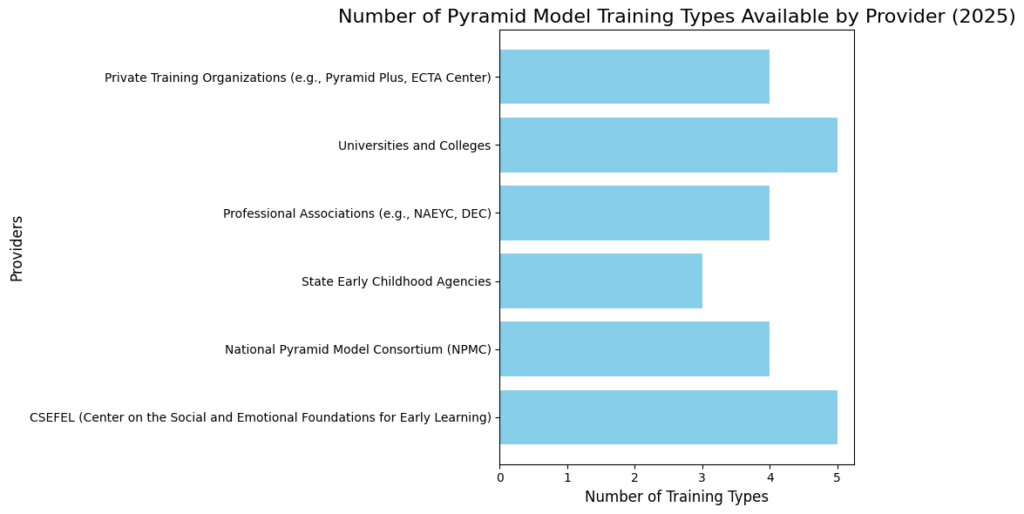
| Provider | Type of Training | Audience | Location/Platform | Duration |
|---|---|---|---|---|
| CSEFEL (Center on the Social and Emotional Foundations for Early Learning) | Online and In-Person Training, Webinars | Early Childhood Educators, Parents, Service Providers | National and Local Workshops, Online Platform | Varies (2 hours – several days) |
| National Pyramid Model Consortium (NPMC) | In-depth Workshops and Professional Development | Educators, Caregivers, Administrators | Regional Locations and Virtual Sessions | Varies (multiple levels) |
| State Early Childhood Agencies | State-Specific Training Programs | Educators, Caregivers, Early Childhood Professionals | State-run Trainings (Local In-Person or Virtual) | Varies by State |
| Professional Associations (e.g., NAEYC, Division for Early Childhood) | Conference Presentations, Webinars, Workshops | Educators, Administrators | National Conferences, Online Webinars | Typically 1-3 days |
| Universities and Colleges | Degree and Certification Programs | Educators, Graduate Students | University Courses, Online Certification Programs | Semester-long (varies) |
| Private Training Organizations (e.g., Pyramid Plus, ECTA Center) | Online and In-Person Training, Coaching | Teachers, Family Support Professionals | National and Local Locations, Online Platforms | Varies (1-5 days) |
Even though the closure of the MNCoE may have changed the landscape for Pyramid Model training in 2025, there are still plenty of excellent options available for educators and early childhood professionals. Whether through CSEFEL’s webinars, state-run programs, professional associations, university certifications, or private training organizations, there are numerous pathways to gaining the knowledge and skills needed to implement the Pyramid Model effectively. By taking advantage of these training opportunities, educators can continue to create supportive, nurturing environments that promote children’s social-emotional growth, paving the way for their success both in school and beyond.
CSEFEL and National Pyramid Model Consortium: Leading the Charge
- CSEFEL and the National Pyramid Model Consortium (NPMC) have long been leaders in providing Pyramid Model training, and they continue to be essential resources in 2025. Despite the closure of the MNCoE, CSEFEL remains a key provider of online and in-person training, webinars, and workshops. These resources cater to a wide audience, including early childhood educators, parents, and service providers, ensuring that the Pyramid Model remains accessible across diverse sectors.
- For those looking to access foundational training or more advanced sessions, CSEFEL offers an array of options. Workshops typically cover topics like creating nurturing environments, addressing challenging behaviors, and implementing individualized supports. These sessions are ideal for anyone seeking to implement the Pyramid Model in their classrooms, childcare centers, or other child-focused environments.
- In addition to CSEFEL, the National Pyramid Model Consortium continues to offer a variety of in-depth workshops and professional development sessions. Whether you’re an administrator, caregiver, or educator, the NPMC’s regional and virtual training programs provide opportunities to learn from experienced practitioners and take your Pyramid Model knowledge to the next level.
State Agencies: Tailored Local Training
Many state agencies that focus on early childhood education are also offering Pyramid Model training in 2025. These programs are typically tailored to local needs and are designed to support the specific challenges faced by educators and providers in each state. State-run programs may include workshops, webinars, and even coaching services to help implement the Pyramid Model’s three-tiered approach to social-emotional learning. Often, these programs are coordinated in collaboration with local universities, community organizations, and other stakeholders, ensuring they reflect the needs of the local community. For those looking to access state-specific Pyramid Model training, the best place to start is by contacting your state’s early childhood education agency or exploring their website for available programs.
Professional Associations: Conferences and Specialized Workshops
- Another excellent source of Pyramid Model training in 2025 is through professional associations like the National Association for the Education of Young Children (NAEYC) and the Division for Early Childhood (DEC). These organizations host national conferences, webinars, and specialized workshops that cover various aspects of the Pyramid Model, from the basics to more advanced applications.
- These conferences and workshops provide educators with a unique opportunity to network with peers, learn from experts, and gain practical skills that can be applied in their classrooms. They also often feature breakout sessions that dive deep into specific components of the Pyramid Model, such as creating a supportive classroom environment or implementing positive behavior supports.
- For those unable to attend in person, these organizations often offer online webinars and virtual workshops, allowing for flexibility in participation.
Universities and Colleges: Academic Programs and Certifications
For educators seeking a more structured and long-term approach to Pyramid Model training, universities and colleges offer degree programs and certifications focused on early childhood education and social-emotional development. These programs are designed to provide a deeper academic understanding of the Pyramid Model, often blending theory with practical application. Graduate students and professionals pursuing advanced degrees in education may find that many universities offer specific courses on the Pyramid Model. Additionally, certification programs can provide educators with formal recognition of their expertise in social-emotional learning frameworks.
University-based programs often include opportunities for hands-on experience through internships and fieldwork, ensuring that educators are prepared to implement the Pyramid Model effectively in real-world settings.
Private Training Providers: Focused, High-Quality Learning
- Private organizations, such as Pyramid Plus and the ECTA Center, also offer highly focused and specialized Pyramid Model training. These organizations provide both online and in-person training, as well as coaching services for educators and family support professionals.
- These programs are typically designed to be highly interactive, with a focus on practical strategies that can be implemented immediately in classrooms or other child-serving environments. For those looking for personalized support, coaching services are available to help educators overcome specific challenges and refine their implementation of the Pyramid Model.
- The ECTA Center, for example, is particularly focused on early intervention programs and provides valuable resources for professionals working with children with disabilities. These types of private providers can be a great option for educators who want to deepen their knowledge and receive tailored support.
FAQs on Pyramid Model Training in 2025
Is the Pyramid Model effective for all children?
Yes, the Pyramid Model is designed to support all children, including those with varying levels of social-emotional needs. The model’s tiered approach allows for individualized support, making it flexible and adaptable to diverse needs.
What are the main components of the Pyramid Model?
The Pyramid Model consists of three tiers: universal supports, targeted supports, and intensive interventions. These tiers help educators address social-emotional development at various levels, from classroom-wide strategies to individualized interventions.
Can I access Pyramid Model training online?
Yes, many organizations, including CSEFEL and the National Pyramid Model Consortium, offer online training options. These can be a convenient way to access quality training from the comfort of your own home.