

The discussion around Pyramid Model vs. PBIS has grown as schools and early childhood programs face rising behavioral, social, and emotional challenges. Although both frameworks aim to create positive learning environments through prevention and structured supports, they differ in design, audience, and application, according to federal education agencies and early childhood experts.
Table of Contents
The Growing Focus on Behavioral Frameworks in Education
Behavioral support systems have taken on renewed urgency in U.S. education policy, particularly following pandemic-related disruptions that affected student behavior and emotional well-being.
Federal data from the U.S. Department of Education show increased investments in social-emotional learning, school climate initiatives, and multi-tiered systems of support across states. Within this context, PBIS and the Pyramid Model are frequently referenced together, sometimes interchangeably, despite serving distinct purposes.
Education researchers note that confusion often arises because both frameworks share a similar visual structure and prevention-based philosophy. However, their origins and intended uses differ in important ways.
PBIS: A System-Level Approach to Schoolwide Behavior
Positive Behavioral Interventions and Supports (PBIS) is a broad framework designed to guide how schools organize, implement, and sustain evidence-based behavioral practices.
Originally developed in the late 1990s and supported through the Office of Special Education Programs, PBIS emphasizes consistency, data-driven decision-making, and schoolwide alignment. Rather than prescribing specific lessons, PBIS outlines how schools should select and monitor strategies that promote positive behavior.
PBIS operates through a three-tiered structure. Tier 1 focuses on universal expectations and supports for all students. Tier 2 offers targeted interventions for students who need additional help. Tier 3 delivers individualized and intensive interventions for students with significant behavioral challenges.
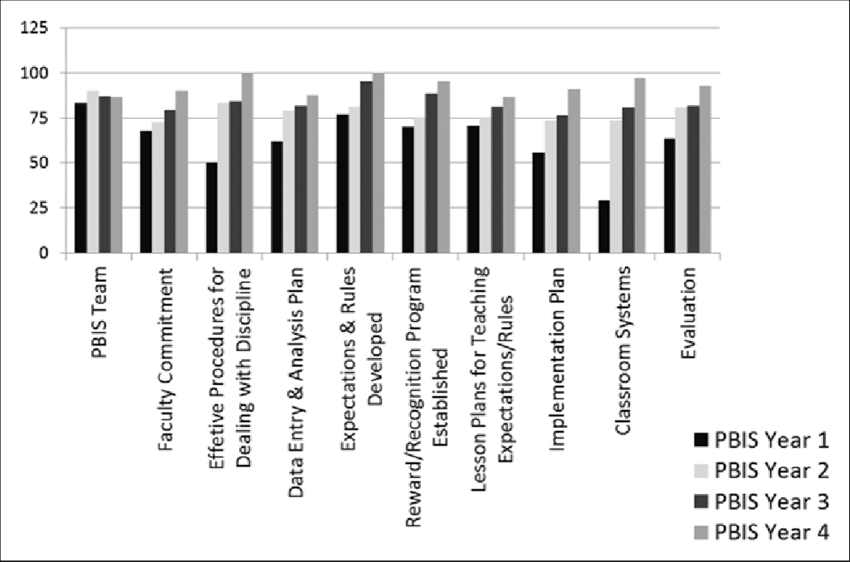
According to the Center on PBIS, successful PBIS implementation depends on leadership teams, staff training, ongoing coaching, and the regular review of behavioral data such as attendance, referrals, and suspension rates.
Evidence and Outcomes Associated With PBIS
Multiple peer-reviewed studies cited by federal agencies link PBIS implementation to reductions in office discipline referrals and suspensions, along with improved school climate.
Researchers caution, however, that PBIS outcomes vary widely depending on fidelity. Schools that treat PBIS as a short-term program rather than a sustained framework often see limited impact.
Critics have also raised concerns about inconsistent implementation and equity. Civil rights advocates note that PBIS does not automatically eliminate disciplinary disparities unless schools intentionally address bias and culturally responsive practices.
The Pyramid Model: Designed for Early Development
The Pyramid Model emerged from early childhood research emphasizing the importance of social-emotional development during the first years of life.
Supported by the National Center for Pyramid Model Innovations, the framework is tailored for settings serving infants, toddlers, and preschoolers, including child care centers, Head Start programs, and pre-kindergarten classrooms.
At its base, the Pyramid Model emphasizes nurturing and responsive relationships between adults and children. The next level focuses on creating supportive environments that reduce behavioral challenges before they occur. Higher tiers provide targeted social-emotional instruction and individualized behavior intervention plans.
Early childhood specialists stress that the Pyramid Model is not solely about addressing challenging behavior. It prioritizes emotional literacy, problem-solving skills, and self-regulation as foundational competencies for later academic success.
Why Developmental Science Matters
Unlike PBIS, which applies across age groups, the Pyramid Model is grounded in child development research that recognizes young children’s limited capacity for impulse control and emotional regulation.
“Behavior in early childhood is communication,” according to guidance published by national early childhood organizations. As a result, the Pyramid Model emphasizes teaching skills rather than enforcing compliance.
Family engagement is also a defining feature. Programs implementing the Pyramid Model are encouraged to collaborate closely with caregivers to ensure consistency between home and school environments.
How Pyramid Model and PBIS Intersect
The relationship between Pyramid Model vs. PBIS is best understood through alignment rather than comparison alone.
Federal guidance recognizes the Pyramid Model as a developmentally appropriate approach within a broader PBIS framework for early childhood. In preschool settings, PBIS provides the organizational structure, while the Pyramid Model defines the classroom-level practices.
This alignment allows states and districts to maintain consistency across age groups while honoring developmental differences. Children who experience Pyramid Model practices in preschool may transition more smoothly into PBIS-aligned elementary schools.
Key Differences Educators Must Understand
Despite shared principles, the two frameworks differ in scope and emphasis.
PBIS focuses on systems-level change, including policies, data systems, and staff roles. The Pyramid Model focuses more intensively on teaching strategies, adult-child interactions, and emotional development.
PBIS addresses a wide range of behaviors across diverse school contexts, from classrooms to cafeterias and buses. The Pyramid Model concentrates primarily on early learning environments where adult guidance is constant and developmentally expected.
These distinctions influence funding, training requirements, and accountability measures at the state and federal levels.
Implementation Challenges and Barriers
Both frameworks face challenges when implemented without adequate resources or training.
Educators report that time constraints, staff turnover, and limited coaching can undermine fidelity. In early childhood settings, the Pyramid Model may be difficult to sustain without stable staffing and family engagement.
PBIS implementation can falter when schools focus narrowly on rewards or discipline metrics without addressing school culture and staff buy-in.
Experts emphasize that neither framework is a quick fix. “These systems require commitment,” education researchers note, “and results depend on how well the practices are embedded into daily routines.”
Policy and Funding Implications
Understanding Pyramid Model vs. PBIS also matters for policymakers.
States often fund the Pyramid Model through early childhood grants, child care quality initiatives, and Head Start programs. PBIS funding more commonly flows through K–12 education budgets and special education supports.
Federal agencies increasingly encourage alignment across systems, particularly as research links early social-emotional development to long-term academic and behavioral outcomes.
Several states now include both frameworks in their multi-tiered systems of support, reflecting a continuum approach from birth through high school.
Why the Distinction Matters for Families
For families, clarity around these frameworks can improve communication with educators and service providers.
Parents of young children may hear references to the Pyramid Model during preschool years, only to encounter PBIS terminology later in elementary school. Understanding the connection can reduce confusion and support continuity.
Advocates emphasize that families play a critical role in reinforcing social-emotional skills across settings, regardless of the framework used.
FAQs About Pyramid Model vs. PBIS
Is the Pyramid Model the same as PBIS?
No. While they share principles, the Pyramid Model is designed specifically for early childhood, while PBIS spans K–12 education.
Can PBIS be used with preschool children?
Yes, but it typically relies on the Pyramid Model to ensure developmentally appropriate practices.
Do schools have to choose one framework?
Many systems use both, aligning them across age groups to create a consistent continuum of support.
Final Paragraph
As schools and early childhood programs respond to evolving behavioral and emotional needs, clarity around Pyramid Model vs. PBIS remains essential. Education officials say both frameworks will continue to play a central role, particularly as policymakers emphasize prevention, early intervention, and evidence-based practice across the education system.