

Schools are under constant pressure to improve outcomes, close gaps, and respond to new expectations. Every year brings fresh programs, new frameworks, and promising initiatives that claim to be the solution to persistent challenges. In the middle of all this, leaders are often expected to make quick decisions with limited information. This is exactly why The Hexagon Tool has become such a valuable resource for schools. The Hexagon Tool helps teams pause, reflect, and make intentional choices instead of reacting to trends or urgency. When initiatives fail, it is rarely because people did not care. More often, it is because the program did not fit the school’s needs, culture, or capacity. Using The Hexagon Tool creates space for honest conversations about readiness and feasibility. It helps schools protect their time, energy, and resources while increasing the chances that new initiatives actually succeed.
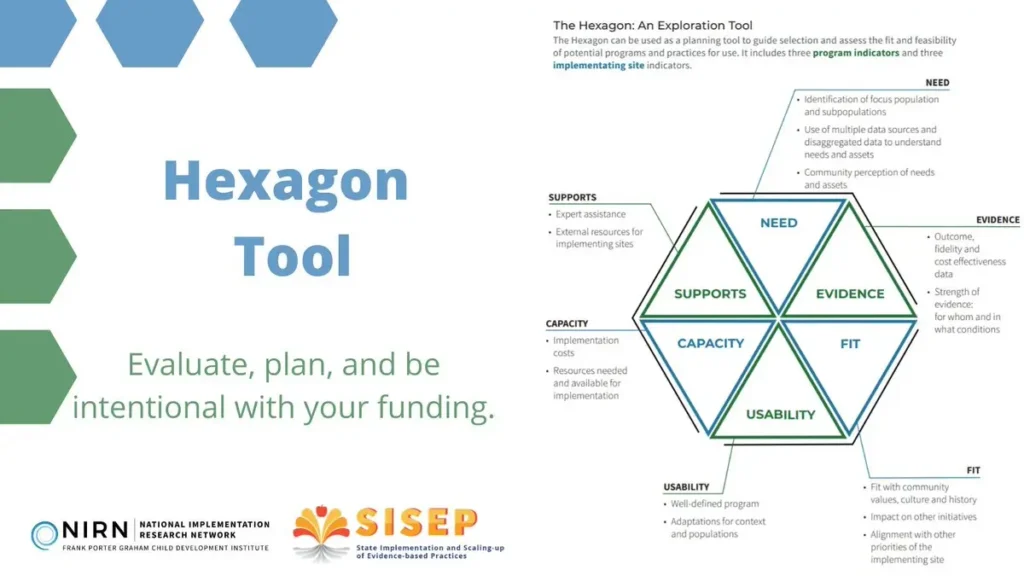
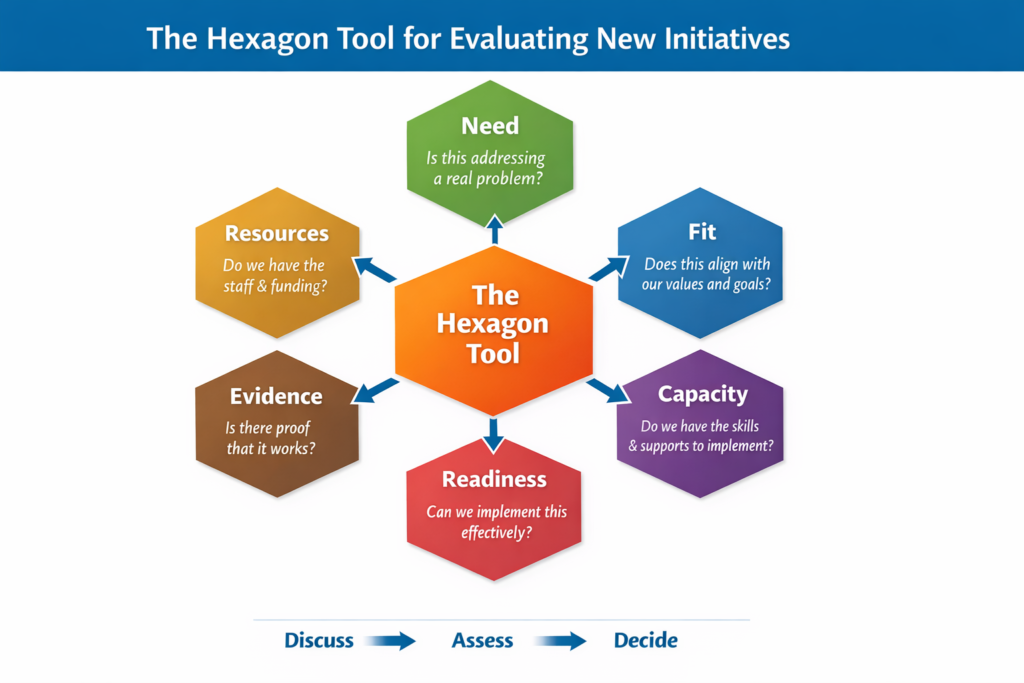
The Hexagon Tool is a structured decision-making framework designed to help schools and organizations evaluate new initiatives before adopting them. Rather than focusing on excitement or pressure to act, the tool guides teams through six essential areas that influence implementation success. These areas encourage deeper thinking about whether a program is truly needed, aligned with values, supported by evidence, and realistic to implement. What makes The Hexagon Tool especially effective is that it is discussion based. It does not tell schools what to choose. Instead, it helps teams understand what they are choosing and why. By working through the six domains together, schools develop shared clarity and stronger commitment to the decisions they make.
Table of Contents
The Hexagon Tool
| Domain | What It Focuses On | Why It Matters |
|---|---|---|
| Need | Identifying the problem the initiative addresses | Ensures the initiative targets a real priority |
| Fit | Alignment with school values culture and goals | Prevents conflict with existing practices |
| Resource Availability | Staff time funding and materials | Confirms the initiative can be supported |
| Evidence | Research and outcome data | Increases confidence in effectiveness |
| Readiness For Replication | Ability to implement as designed | Protects program integrity |
| Capacity To Implement | Leadership systems and supports | Supports long term sustainability |
The Hexagon Tool is not about slowing progress. It is about choosing progress that lasts. When schools take time to evaluate readiness and alignment, they create the conditions for meaningful and sustainable improvement.
What Is the Hexagon Tool
The Hexagon Tool is not a checklist or a quick approval form. It is a structured conversation that helps teams slow down and think critically before committing to a new initiative. Each of the six domains represents a different factor that can either support or derail implementation. Schools often discover through this process that an initiative sounds promising but does not address their most urgent needs. Others realize they lack the infrastructure or training required to implement the program with quality. The Hexagon Tool brings these insights to the surface early, when adjustments are still possible and before resources are invested.
How To Use the Hexagon Tool
- Using The Hexagon Tool starts with clearly defining the initiative under consideration. Teams should understand what the program involves, who it serves, and what outcomes it claims to produce. Without a shared understanding of the initiative itself, meaningful evaluation is difficult.
- Once the initiative is defined, the team works through each of the six domains. Members discuss guiding questions related to need, fit, resources, evidence, readiness, and capacity. Many teams use a rating scale to capture perceptions, but the most valuable part of the process is the discussion behind the ratings. Differences in perspective often reveal important gaps or strengths that might otherwise go unnoticed.
- After completing all six domains, the team reviews the overall picture. Some initiatives show strong alignment across all areas, while others reveal clear challenges. At this point, teams can decide whether to move forward, gather more information, delay adoption, or explore alternative solutions. The Hexagon Tool supports thoughtful decision making rather than rushed commitments.
Lessons Learned from Using the Hexagon Tool
- One of the most important lessons learned is that preparation matters. Teams that gather data ahead of time have richer and more productive discussions. This might include student outcome data, staff capacity information, or summaries of research evidence. Coming to the table informed helps keep conversations focused and grounded.
- Another lesson is the importance of including diverse voices. When only administrators are involved, important implementation details can be missed. Teachers, coaches, and support staff often have practical insights about feasibility and workload that significantly influence success. Including multiple perspectives strengthens decisions and increases buy in.
- Schools also learn that disagreement is not a problem. In fact, respectful disagreement is a strength of the process. When teams feel safe expressing concerns, they are more likely to identify potential barriers early. The Hexagon Tool creates a shared language that helps teams navigate these conversations constructively.
Why The Hexagon Tool Matters for Schools Today
Initiative overload is a real issue in education. Schools are often juggling multiple programs at once, each with its own training requirements, data systems, and expectations. This leads to burnout, inconsistency, and limited impact. The Hexagon Tool helps schools be more selective and strategic. By using The Hexagon Tool, schools can focus on initiatives that align with their priorities and capacity. This leads to better implementation quality and more sustainable change. In a time when resources are limited and expectations are high, making fewer but better decisions is critical.
The tool also supports equity focused decision making. By examining need and fit carefully, schools can ensure that initiatives address the needs of their most vulnerable students rather than simply adopting one size fits all solutions.
Common Challenges When Using The Hexagon Tool
- One common challenge is time. School teams are busy, and dedicating time to structured decision making can feel difficult. However, schools that invest time upfront often save time later by avoiding failed implementations and constant course corrections.
- Another challenge is using the tool after a decision has already been made. Sometimes schools are expected to adopt an initiative due to funding or policy requirements. Even in these situations, The Hexagon Tool can still be valuable. It can help teams identify areas that need additional support or adaptation before implementation begins.
- Some teams also struggle with being honest about capacity. It can be uncomfortable to acknowledge limits, but ignoring them leads to greater problems later. The Hexagon Tool encourages realistic planning and helps normalize these conversations.
Building A Culture of Thoughtful Decision Making
When schools use The Hexagon Tool consistently, it becomes more than a onetime activity. It helps build a culture of thoughtful, evidence informed decision making. Teams become more skilled at asking the right questions and less reactive to external pressures. Over time, this approach strengthens leadership, improves collaboration, and increases trust among staff. Decisions feel more transparent, and staff are more likely to commit to initiatives they helped evaluate. The Hexagon Tool supports not only better choices but also healthier organizational practices.
Using The Hexagon Tool for Long Term Success
The Hexagon Tool is most effective when it is part of a larger implementation process. Decisions made through the tool should be followed by careful planning, professional learning, and ongoing evaluation. Schools can also revisit the six domains over time as conditions change. For example, an initiative that was not feasible one year may become more realistic after staffing changes or additional funding. Revisiting The Hexagon Tool allows schools to adapt thoughtfully rather than starting from scratch each time.
FAQs on The Hexagon Tool
What Is the Main Purpose of The Hexagon Tool
The Hexagon Tool helps schools determine whether a new initiative is appropriate, feasible, and sustainable before adopting it.
Who Should Participate in The Hexagon Tool Process
A diverse team including administrators teachers and support staff leads to stronger discussion and better decisions.
Is The Hexagon Tool Only Used in Education
No. While widely used in schools, it is also applied in other human service and organizational settings.
Can The Hexagon Tool Reduce Initiative Fatigue
Yes. By carefully evaluating fit and capacity, schools avoid taking on initiatives they cannot sustain.