
American politics is currently embroiled in a new debate and controversy surrounding the governors of various states. On one side is former US President Donald Trump, and on the other are Democratic governors whose invitations to a traditional national event have sparked controversy.
The controversy began when Trump announced that all governors, regardless of party affiliation, were invited to the annual White House meeting and dinner—except for two Democratic governors: Wes Moore (Governor of Maryland) and Jared Polis (Governor of Colorado).
Table of Contents
Trump’s Post and Its Meaning
Trump wrote on his social media platform, Truth Social, that “all governors are invited to the White House event, except for two who I believe are unworthy of being there.”
Trump also stated in the post that he would extend invitations to some Democratic governors with whom he has a good political relationship, such as Governors Gavin Newsom (California) and J.B. Pritzker (Illinois). However, he did not invite Moore and Polis.
This move has drawn mixed reactions from political analysts, the opposition, and the media. Some are calling it a political ploy, while others say it is a move to divide a traditionally bipartisan event.
Why were the two governors excluded?
According to Trump’s statement, he did not invite Moore and Polis to the event because he felt they were “not worthy of attending.”
According to analysts, there have been some previous disagreements between Trump and Polis, such as the jailing of a local election official over an election security issue, which Trump has repeatedly criticized—and he has made harsh comments about Polis.
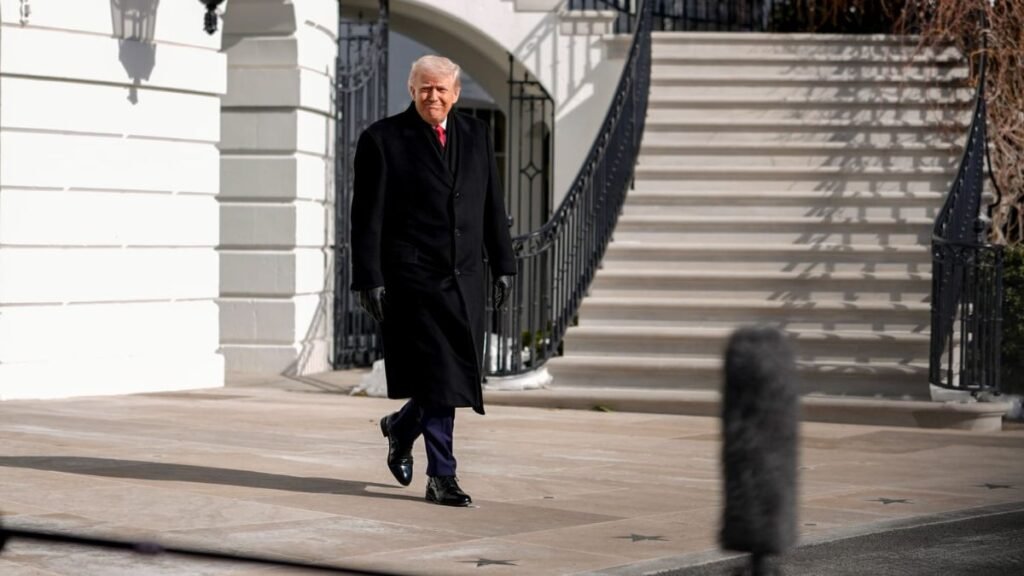
Trump also leveled allegations against Wes Moore, alleging that he had been lax in the work on rebuilding a bridge in his state. These allegations exacerbated existing differences, which is why Trump did not invite him to the event.
In addition to these personal differences, Trump’s move has further deepened the existing divide between the political parties, calling into question the tradition of consensus and partnership within American democratic institutions.
Democratic Governors’ Opposition and Particular Solidarity
Following Trump’s statement and stance, a large number of Democratic governors condemned the decision. They stated that the White House summit has been a bipartisan event for years, where governors from both parties meet to share ideas and enhance cooperation between the federal and state governments.
The group’s statement stated that singling out any governor at such events violates that tradition and not only undermines the spirit of political harmony but also undermines opportunities for federal-state partnership. Approximately 18 Democratic governors, including several prominent politicians, signed the statement.
They stated that only if all governors are invited equally can the meeting be productive and positive. If two governors are excluded, they will not attend such an event, and several Democratic governors have explicitly stated that they will boycott all White House events unless they are invited equally.
Is this a sign of political division?
This controversy isn’t limited to an invitation to a single event—it raises a serious question about the American political landscape: Are democratic institutions and traditional practices being used to create political division?
Some analysts believe that Trump’s decision and the subsequent reactions indicate how deeply political polarization has deepened in American politics. While this event has been an opportunity for dialogue and joint efforts between governors of both parties for years, it now appears to be changing its form—bringing the already existing political conflicts and disagreements within the country into sharper focus.
The Roles of Governors and Nationwide Challenges
Governors are not only the chief administrators of their states—they also play a crucial role at the national level in policymaking, disaster management, education, economic development, healthcare, and other vital areas. These White House meetings have never been merely a formality—they provide a common platform for the federal and state governments to work together to address citizens’ problems.
At a time when America is facing numerous challenges—whether economic, healthcare, or social issues—promoting participation and cooperation among governors is considered even more important. But this controversy has raised serious questions about the role of this common platform.
Conclusion: Controversy and the Politics Ahead
This controversy in the American political climate indicates that traditional traditions of cooperation and bipartisanship are now facing difficult times. Trump’s decision and the response from Democratic governors have made it clear that there are now deep divisions in American politics not only about the tradition of federal-state cooperation, but also about the objectives, character, and direction of that cooperation.
The future consequences of such decisions and reactions will only become clear over time. But one thing is certain—this is not just an invitational controversy but also a broader debate about shared ideological values, respect, and democratic traditions in politics.
FAQs
Q1. Which Democratic governors were not invited to the White House gathering?
A. Wes Moore of Maryland and Jared Polis of Colorado were not invited.
Q2. Who extended the invitations to the White House gathering?
A. Former President Donald Trump extended the invitations.
Q3. Were all other Democratic governors invited?
A. Yes, all other Democratic governors were invited to the gathering.