
Anger is a natural emotion, but sometimes it can get the best of us. For children, learning to manage this powerful emotion is essential for their emotional development and social interactions. One of the most effective and fun tools for teaching kids how to handle anger is the Tucker the Turtle technique. This simple yet powerful method encourages children to stop, think, and calm down when they feel their anger building up. Using this approach, kids can better understand their emotions and learn to control their reactions before they act impulsively.

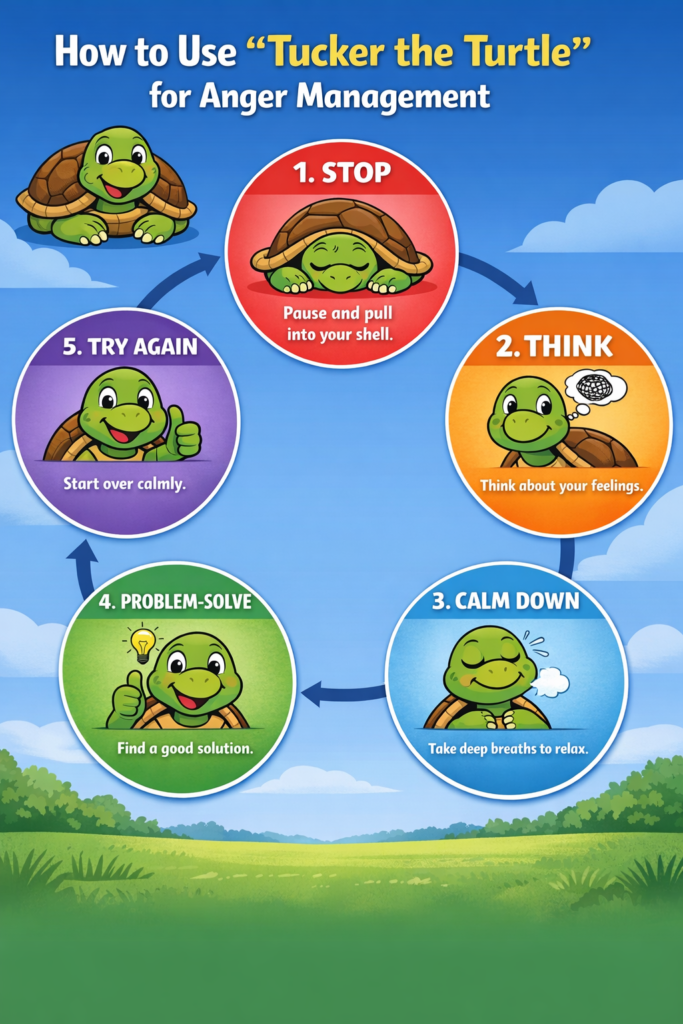
The Tucker the Turtle method provides children with a structured, step-by-step approach to managing their anger. The technique revolves around Tucker, a turtle who gets upset just like any child but knows how to manage his anger using a series of easy-to-follow steps. These steps Stop, Think, Calm Down, Problem-Solve, and Try Again give children a clear framework to follow when they feel anger rising. It helps them pause and think, rather than acting out, which can lead to better emotional regulation and healthier responses to frustrating situations. By following these steps, children can learn to control their anger and approach problems with a calm mind.
Table of Contents
Tucker the Turtle
| Step | Description | Purpose |
|---|---|---|
| Stop | When feeling angry, stop what you’re doing. | Helps to interrupt the cycle of anger. |
| Think | Think about what made you angry and how you feel. | Encourages self-reflection on emotions. |
| Calm Down | Take deep breaths or count to calm down. | Provides a tool to self-regulate. |
| Problem-Solve | Once calm, think about what to do next or how to solve the issue. | Encourages constructive decision-making. |
| Try Again | After calming down, take action or talk to others calmly. | Reinforces positive behavior and outcomes. |
The Tucker the Turtle anger management method is a simple yet powerful tool that can help children manage their emotions effectively. By breaking down the process into clear steps Stop, Think, Calm Down, Problem-Solve, and Try Again children are equipped with the skills they need to control their anger and respond to frustration in a healthier way. Over time, these skills can help children build emotional resilience and improve their social interactions. Tucker the Turtle provides a fun and easy way for children to understand their emotions and practice self-regulation, making it a valuable tool for parents and educators who want to help children navigate the ups and downs of life with confidence and calm. By consistently practicing the Tucker the Turtle method, children can develop lifelong skills that will help them manage their emotions in a variety of situations.
Step 1: Stop – The First Step to Controlling Anger
- The first step in the Tucker the Turtle anger management technique is to Stop. This step is all about helping children pause and take a moment to recognize that they’re feeling angry. The key here is to interrupt the emotional response before it becomes overwhelming. For children, the concept of stopping is represented by Tucker the Turtle pulling his head into his shell this gives them a clear, visual cue that it’s time to slow down and stop. Stopping what they’re doing allows children to take control of the situation, instead of letting their emotions take over. This can help prevent impulsive behavior and give them time to think things through.
- By teaching children to stop, we provide them with a valuable tool to manage their emotions in real-time. Instead of reacting right away, they can take a moment to pause and evaluate their feelings. This simple action is incredibly powerful in preventing emotional outbursts that might be regretted later. It teaches children that it’s okay to take a step back and breathe before they react.
Step 2: Think – Reflecting on Feelings and Causes
- Once children have stopped and taken a pause, the next step is to Think. This part encourages children to reflect on what made them angry and how they are feeling. By asking questions like, why am I angry? or What happened that upset me? children can start to understand the cause of their emotions. Thinking through the situation helps children separate their feelings from their reactions, teaching them that they can control their actions, even when they feel upset. This step is crucial because it builds emotional awareness and helps children take ownership of their feelings, making it easier to manage them in the future.
- The “Think” step not only promotes self-reflection but also enhances emotional intelligence. By teaching children to recognize and understand their emotions, we provide them with the tools they need to handle future situations with more awareness and control. They can learn to identify the triggers of their anger and take proactive steps to prevent it from escalating.
Step 3: Calm Down – Using Relaxation Techniques
- After thinking through their feelings, the next step is to Calm Down. Tucker the Turtle teaches children how to use simple techniques to help regulate their emotions. Deep breathing, counting to ten, or imagining a peaceful place are all great ways to calm down. The goal of this step is to help children lower their emotional intensity and return to a state where they can think clearly and make rational decisions. By practicing calming techniques, children learn to control their body’s physical response to anger, helping them stay composed even in frustrating situations.
- The “Calm Down” step is critical in anger management because it helps children to manage the physiological aspects of anger, such as increased heart rate or tense muscles. Relaxation techniques like deep breathing can reduce these physical symptoms, allowing children to regain composure. It teaches them that they have control over their bodies and emotions, which empowers them to handle difficult situations calmly and thoughtfully.
Step 4: Problem-Solve – Thinking of Solutions
- Once children have calmed down, they are ready for the next step: Problem-Solve. This is where children are encouraged to think about the issue that made them angry and come up with solutions. Instead of staying stuck in frustration, they are taught to approach the problem logically and figure out what they can do next. This step teaches children that it’s not enough to just calm down they also need to take positive action to resolve the issue. By fostering problem-solving skills, the Tucker the Turtle method helps children develop resilience and learn to face challenges with a calm, solution-focused mindset.
- The Problem-Solve step also provides an opportunity for children to practice critical thinking and creativity. They can think through different ways to handle the situation, whether it’s talking to someone, finding a compromise, or simply walking away from the situation. Problem-solving builds confidence in their ability to handle difficulties, which is an essential skill for emotional well-being and healthy social interactions.
Step 5: Try Again – Reinforcing Positive Behavior
- The final step in the Tucker the Turtle technique is Try Again. After calming down and solving the problem, children are encouraged to take action or talk to others in a calm, respectful manner. This step is all about reinforcing positive behavior. Even if the situation doesn’t go perfectly, children are taught that it’s okay to try again and keep improving. This helps build a growth mindset and encourages children to keep working on their emotional regulation skills. The “Try Again” step teaches children that emotional control is not a one-time effort but a continuous practice that helps them grow.
- The “Try Again” step is essential because it reinforces the idea that anger management is a lifelong process. Children are taught that setbacks are normal and that they can always improve. This mindset fosters resilience and self-confidence, encouraging children to keep practicing the skills they’ve learned and apply them in future situations. It also promotes persistence, showing children that they can always work through difficult emotions and become better at managing them over time.
FAQs on Tucker the Turtle
What is the “Tucker the Turtle” method?
The “Tucker the Turtle” method is a technique used to help children manage anger. It involves a series of steps: Stop, Think, Calm Down, Problem-Solve, and Try Again, which help children pause, reflect, and control their emotions.
How does the “Stop” step help children manage anger?
The “Stop” step encourages children to pause when they feel angry, giving them the time to recognize and control their emotions before reacting impulsively.
Why is it important for children to think before reacting to anger?
Thinking before reacting helps children understand the root cause of their anger and recognize that they can control their actions, allowing them to make better decisions in stressful situations.
How can children calm down when they’re angry?
Children can use calming techniques like deep breathing, counting to ten, or imagining a peaceful scene to help lower their emotional intensity and regain control over their feelings.